
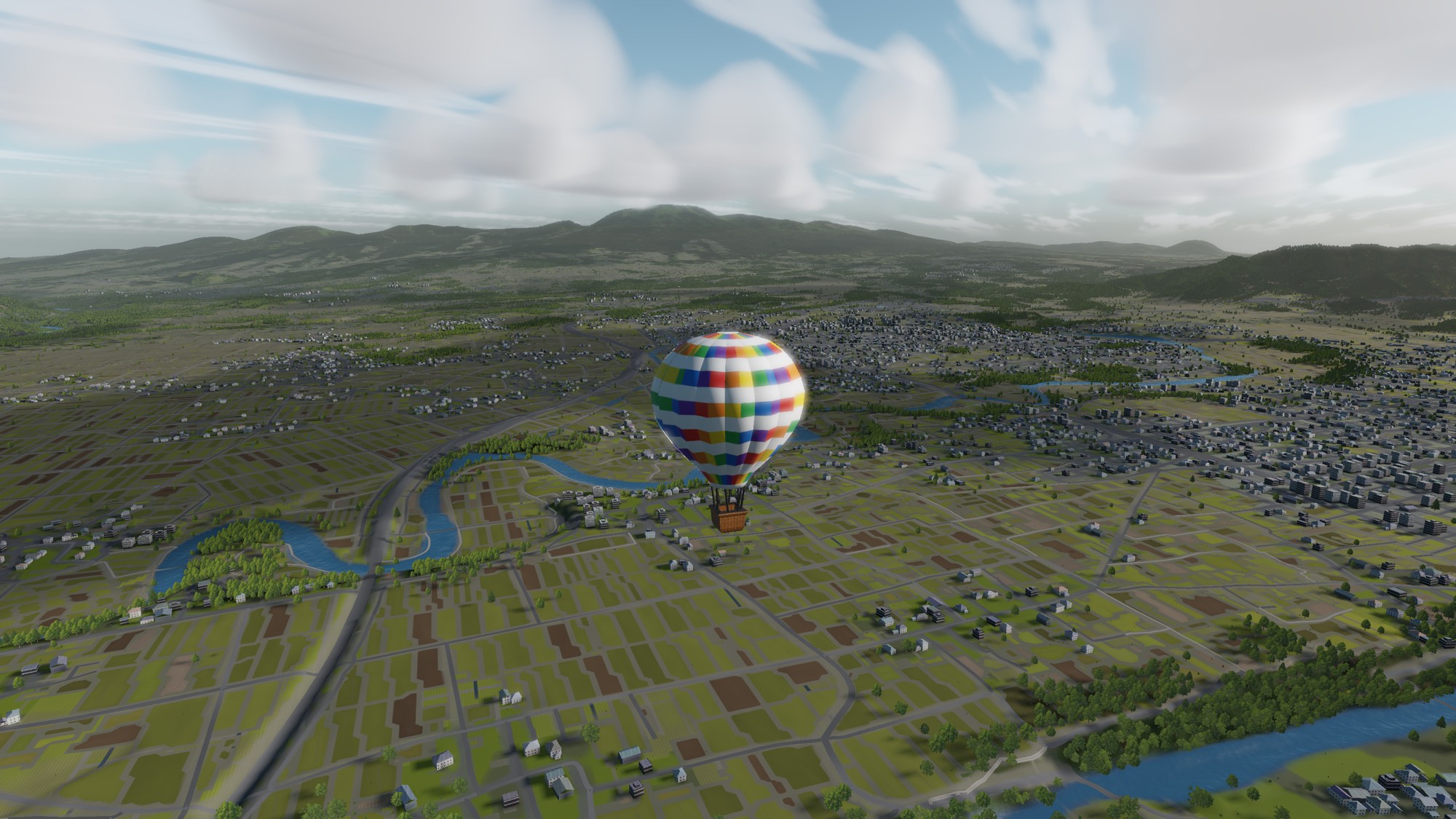
Two buttons. One sky.
A whole country to cross.
You can learn this game in about a minute — and then spend a year of mornings finding out how far it goes. Here is everything it asks of you, in the order you will meet it.
Four steps and you are in the air.
-
Take a name and go
The game hands you a balloon and a name for it — White Cotton Cloud, say. Keep it, or shuffle for another. That is the entire sign-up: no email, no password, no forms. You lift off from Saku, high in the Nagano hills, where Japan is furthest from the sea in every direction.
-
Hold a button
Bottom right, two round buttons. Hold the burner and you climb; hold the vent and you sink. Take your thumb off and the balloon settles at whatever height it drifted to.
-
Find the wind that suits you
Every height is going somewhere different. Open the wind sheet, see which layer is heading your way, and burn or vent until you are riding it.
-
Put your phone away
This is the good bit. Your balloon keeps flying without you. Come back after lunch, or tomorrow morning, and find out how far it got.
Hot air goes in, or hot air goes out.
That is the whole control scheme, and it is exactly the control scheme a real balloon pilot has. Both buttons work the same way: they do something while you are holding them, and nothing when you are not.
Burner — hold to rise
Heat goes into the envelope for as long as your thumb is down, and the balloon starts to climb. It is not a toggle and it is not a number you type: you hold it, you watch the ground drop away, and you stop when it looks right.
Vent — hold to sink
A flap at the top of the envelope lets the hot air out, and down you go. Hold it in short pulls to drop through a layer; hold it steady near the ground and that is a landing.
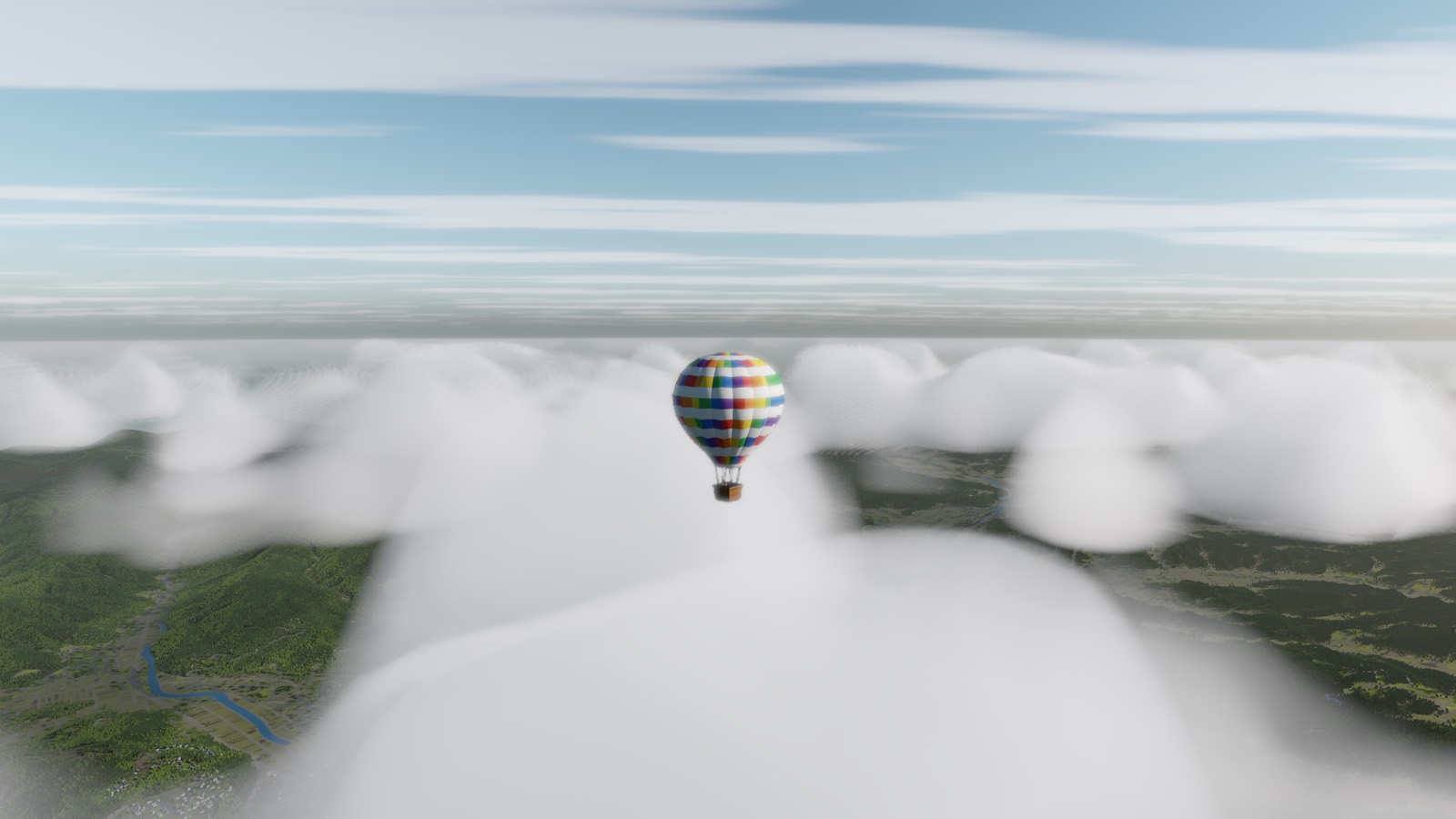
Choose a height, and you have chosen a direction.
The wind at 300 m and the wind at 2,000 m are almost never going the same way. That gap is your steering wheel. Climb into the layer that is heading where you want to be, ride it, and drop out of it when it turns.
And the forecast keeps its promises. The wind is worked out from where you are and what time it is, and your phone runs the same maths as the server — so the sheet is not a guess with a percentage attached. What it shows is what the sky will do.
| Altitude | +4h | +8h | +12h | +16h | +20h | +24h |
|---|---|---|---|---|---|---|
| 3,000 m | ↓ | ↓ | ↙ | ↙ | ↙ | ↙ |
| 2,500 m | ↓ | ↓ | ↓ | ↙ | ↙ | ↓ |
| 2,000 m | ↘ | ↓ | ↓ | ↓ | ↙ | ↙ |
| 1,500 m | ↘ | ↘ | ↓ | ↓ | ↘ | ↘ |
| 1,200 m | ↘ | ↘ | ↘ | ↘ | ↓ | ↓ |
| 800 m | → | ↘ | ↘ | → | ↗ | ↗ |
| 500 m | ↗ | → | → | → | ↗ | ↗ |
| 300 m | ↗ | ↗ | → | → | ↗ | ↑ |
Arrow = where that wind is goingColour = how fastHighlighted row = the height you are onAn illustration, not a screenshot
Three real answers, and the move that gets you each one.
Under the sheet, the game flies the next day for you and reports back. First it says what happens if you do nothing at all — east 56 km, Fujinomiya — and then it offers three genuinely different places today's sky can reach, each with the move that takes you there: burn to 600 m. The cards are for reading, not tapping. Nobody is going to fly you there.
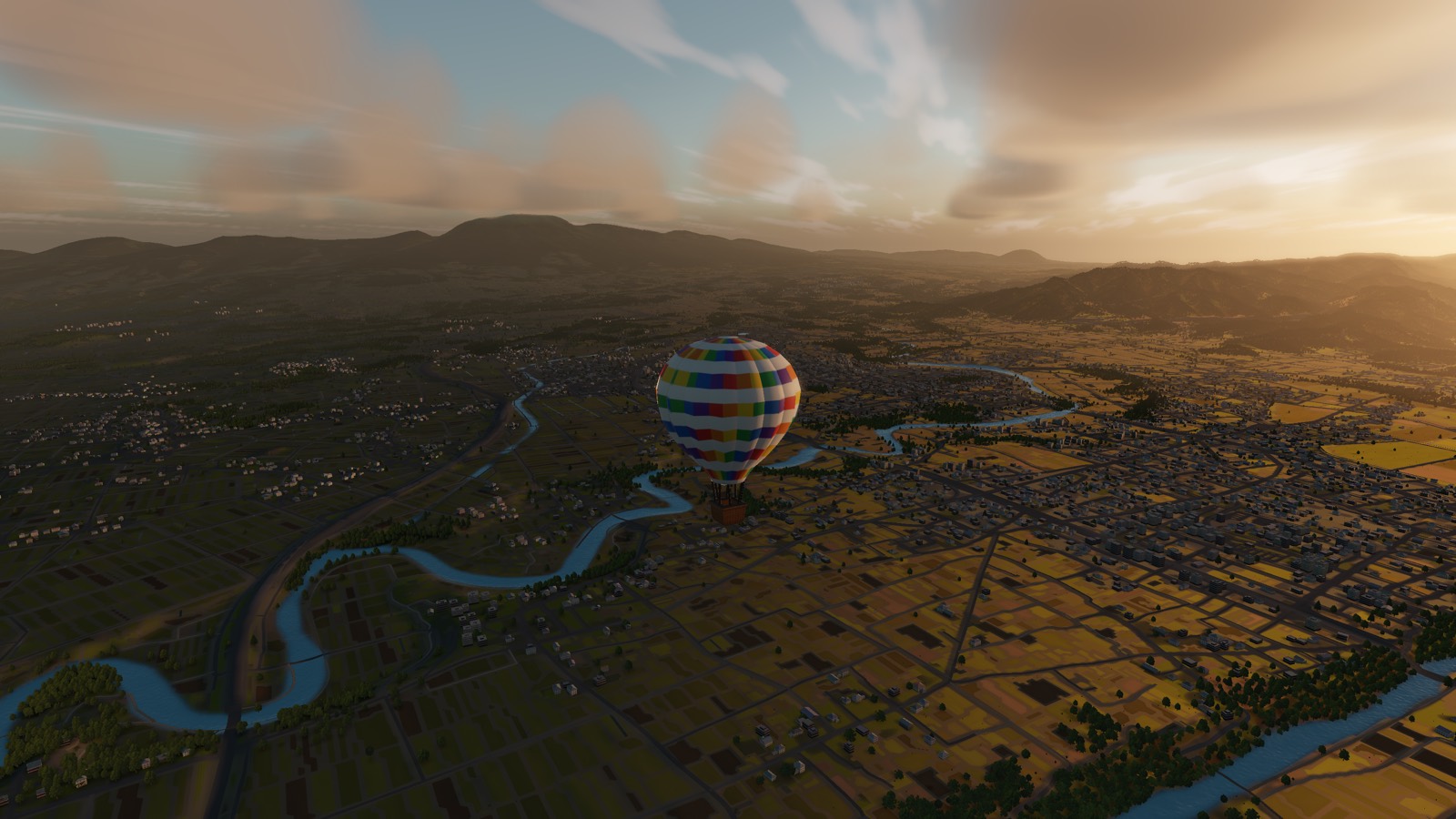
Counted in hours, not percentages.
Every second on the burner costs propane, and the tank tells you what you actually want to know: how long you can leave it alone. Fly low and a full tank lasts you most of a week. Fly high, where the fast layers are, and it goes quicker — which is what makes height a real decision rather than a free one.
Opening the app tops the tank up. Check in once a day and you will always be flying; leave it for a week and your balloon lands itself gently, moors, and waits for you with the fields around it. Refill, and off you go again.
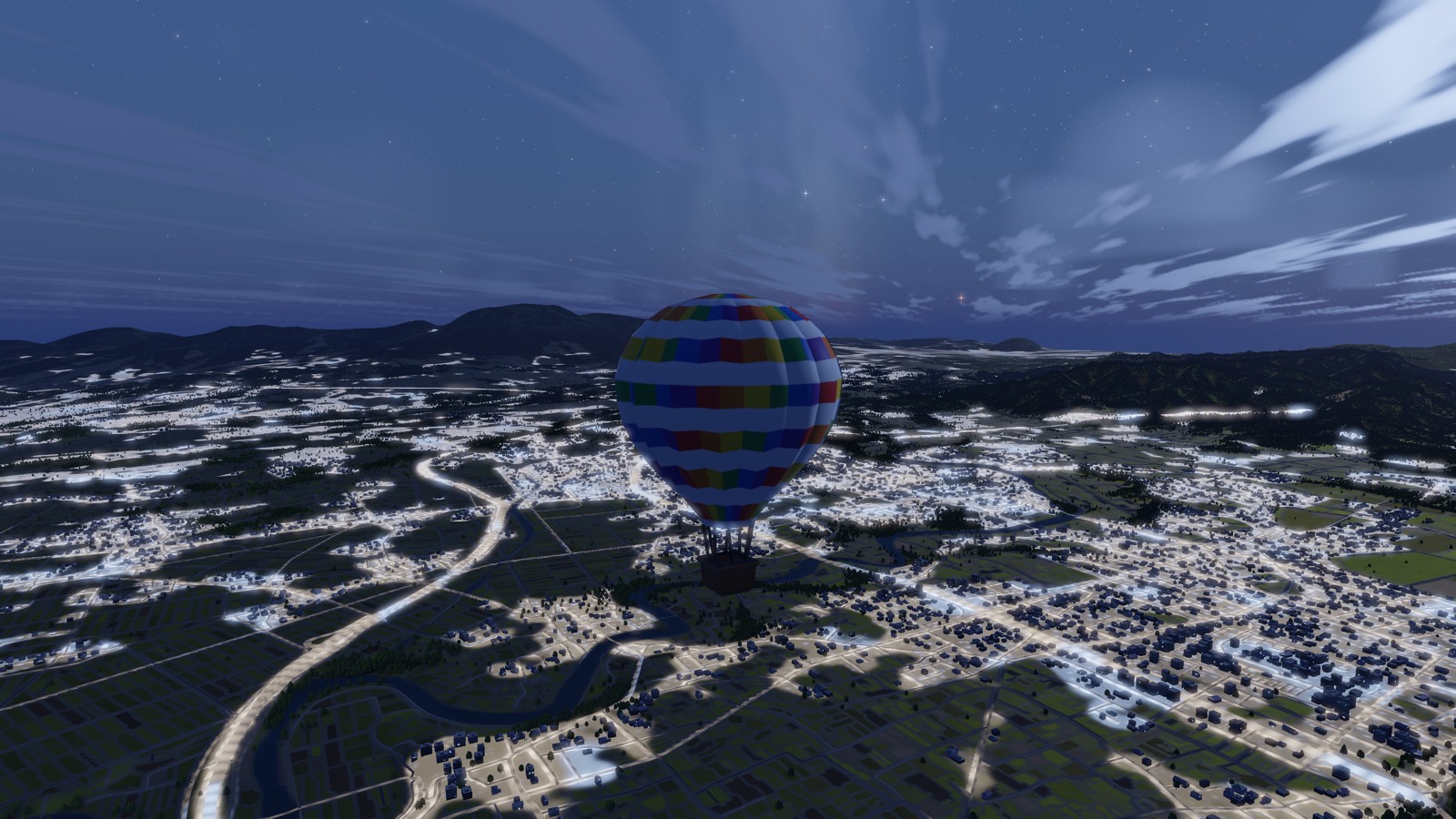
Open it, and the night plays back.
The flight is run on our servers, so it carries on whether the app is open, closed or uninstalled from your attention entirely. The best screen in this game is the one you get without pressing anything.
Welcome back tells you how long you were gone, how far you were carried and in which direction, and the name of the town you are over right now. Your tank is topped up. Any goal you were chasing has resolved. New badges are waiting, and so is anyone who waved at you in the dark.
Goals for the days you want one.
You can drift for a month without ever being asked to achieve anything. But when you want a reason to pick a direction, the game has two — and neither of them hurries you.
Get near somewhere, by a day.
Three offers at a time — a mountain, a coast, a city — each with a distance, a direction and a few days to do it in. Every one of them is picked out of the wind you actually have, so all three are genuinely reachable. Come within 10 km and it counts.
The ones you collect by accident.
Prefectures crossed, named peaks passed within sight, lakes, capes, the far corners of the map, seasons, distance flown. They tick over while you are asleep, and nothing is hidden from you — you can always see what is out there and go looking.
Two or three worth keeping.
The flight takes its own photographs at the best moments and hands them to you when you open the app. That is the souvenir: not a score, a scrapbook of places you were carried over.
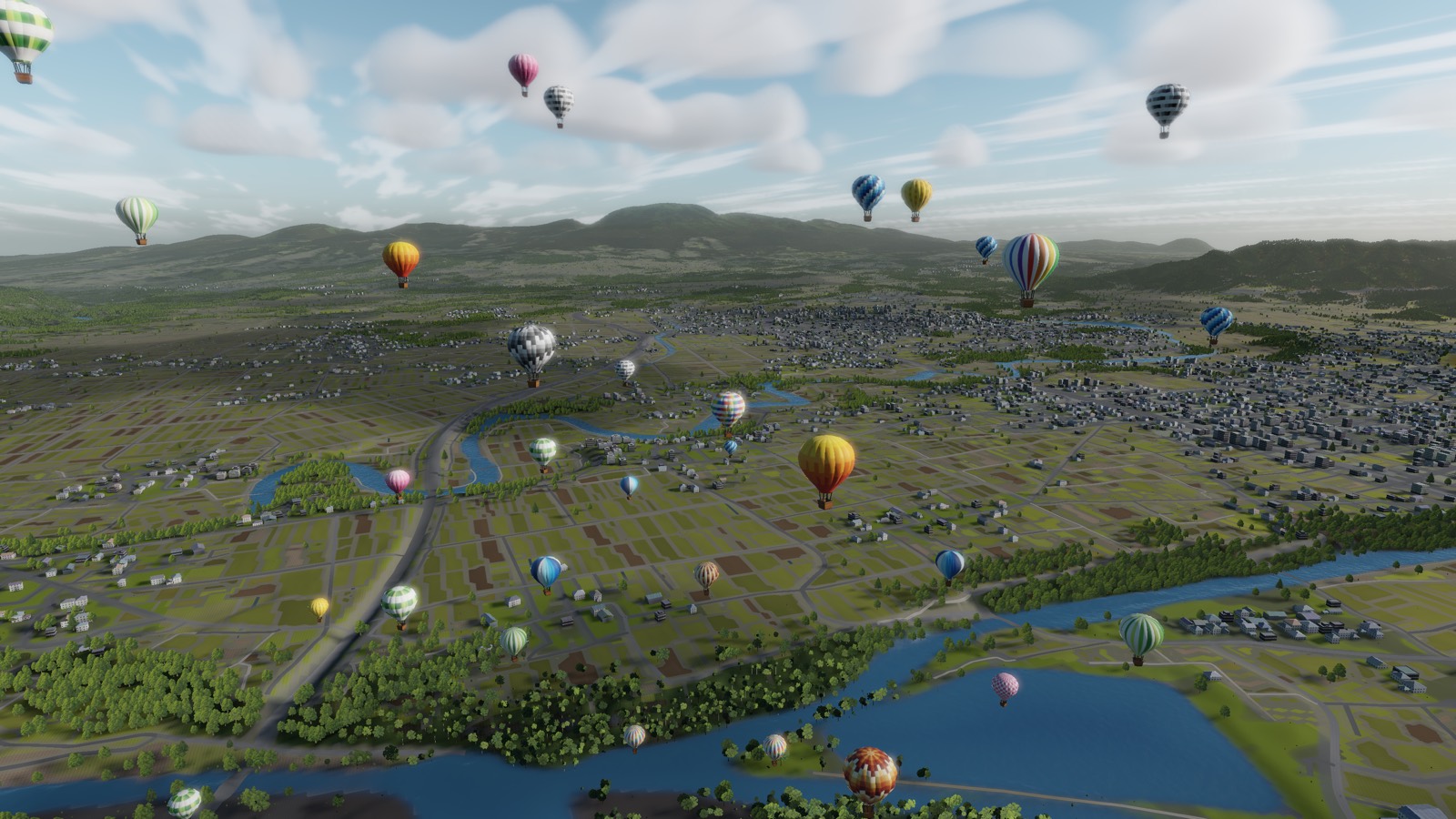
You are not the only one up here.
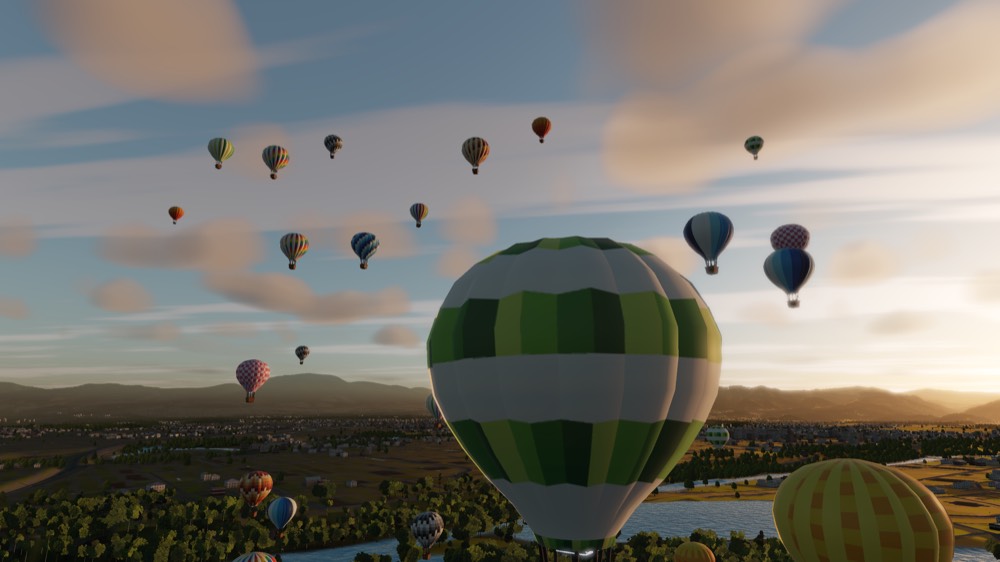
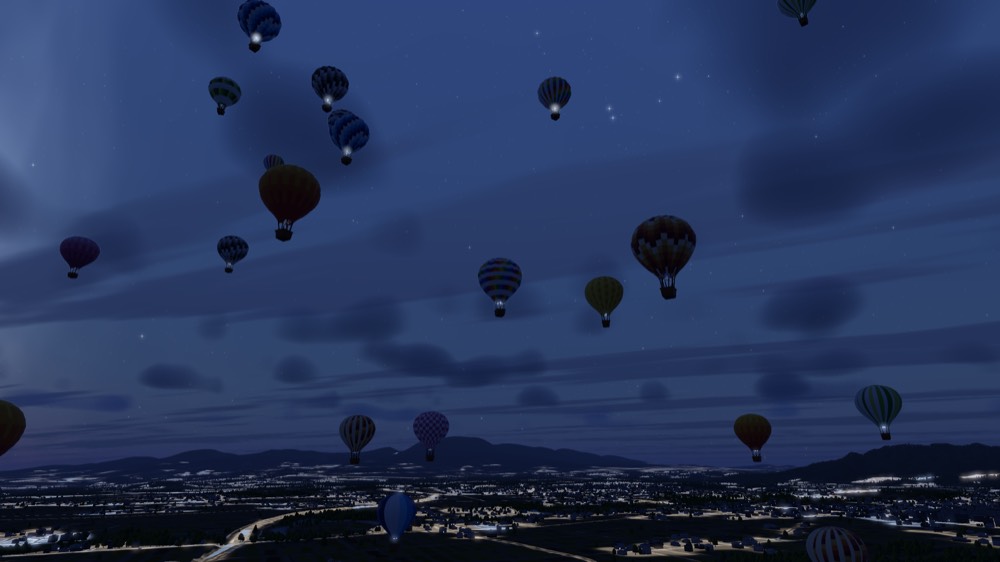
Other people's balloons are really there, riding the same wind you are. Find the same layer as someone and you will travel together all afternoon without either of you planning it — and when the seasons turn, everyone converges: north with the cherry blossom in spring, over the fireworks in summer, onto the riverbeds of the autumn fiestas.
You can wave, send a greeting from a list, hand over a gift, or flash your burner after dark. There is no text box anywhere in the game, which is exactly why the sky stays a calm place.
The rest of it, on one page.
| Starting out | Pick a name and fly. No account, no email, no password — your balloon is yours by a code the app makes on first launch, and moving to a new phone is a short transfer code. |
|---|---|
| Where you begin | Saku, in the Nagano highlands — the part of Japan furthest from any coast. |
| Steering | Altitude. Burn to rise, vent to sink, and ride the layer going your way. |
| Speed | A balloon cruises at 20–40 km/h, and an hour in the game is an hour of your day. Tokyo to Osaka is a day or two of real time. |
| Time and season | The same clock and calendar as the window next to you. Fly at 6 a.m. in November and you get a November dawn. |
| Weather | Cloud, rain, haze and the stars are generated from where you are and what time it is. They are there to be seen, not survived — a balloon in the rain is simply a balloon in the rain. |
| The coast | Out over open water the wind leans back toward the nearest shore — though it stays wind, never a rudder. Come down in the sea and you are recovered to the coast, ready to launch again. |
| Offline | You can still fly. The terrain is cached and your phone can work out the wind on its own; it catches up with the server next time you have a signal. |
| Talking to people | Waves, set greetings, gifts and burner flashes. There is no free text anywhere in the game, by design. |
| Anything to buy | Looks, and only looks: envelope patterns and shapes, basket trim, lights, flags. Wind, fuel, distance and time skips are not for sale and never will be. |
Balloon Journey Japan is still being built, so parts of this will get better before release. Anything we can answer today is on the support page, and the balloon facts explain why real balloons work this way too.
Hear it first
One email when the beta opens, one when the game is out.